How to Write an Author Bio That Earns Trust
Published October 30, 2026
Name, role, the experience that qualifies this person for this topic, and links to proof someone else controls, like a state license lookup. Two lines under the post, a full author page behind it. Never invent a credential.
Why the Bio Matters
Google's helpful content page asks whether your pages carry a byline where readers expect one, and says it strongly encourages accurate authorship information. The rater guidelines tell raters to start with the creator's profile when judging trust.
Asked about author bios in 2019, John Mueller said to check with your users, as Search Engine Journal reported. He is right, and users are clear about it. When someone is about to trust a stranger with their car, their house or their health, they want to know who is talking.
What to Put In It
We have built over 150 author pages on this site. Every bio we write answers the same five things.
- Full name. First and last. A first name alone cannot be checked.
- What they do now. Role and business, with the city.
- How long. Years in the field or the year the business started.
- Credentials with numbers. State license, board certification, trade certification. Include the number when it is public.
- Proof someone else controls. A license lookup link, a BBB profile, a published article, a podcast appearance.
Skip the adjectives. Passionate, dedicated and award-winning prove nothing. A license number proves something.
The Two-Line Box and the Full Page
Use two layers. Under the post goes a short box. Behind the name sits a full author page.
Short box template
[Full name], [credential], is [role] at [business] in [city]. [He or she or they] has [years] years of [kind of work] and writes on [topics].
Full author page
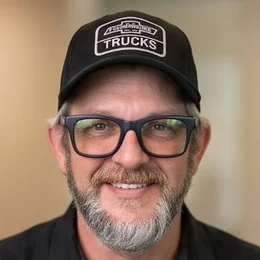
- Headshot, real, not AI.
- Experience: the hands-on work.
- Expertise: training, certifications, licenses.
- Authoritativeness: press, podcasts, articles elsewhere.
- Trust: things anyone can check, like license status and reviews.
- Every post they wrote or reviewed.
- Links to their real profiles and website.
- Topics they do not write about.
That last item is ours. Each expert on EEAT Authors lists topics they rule out, and their name never goes on those.
Real Examples
Three of our author pages, each in a different field.
- Anthony Limpert, auto repair and local marketing. Founder of Clickflame since 2004.
- David Schassler, private investigation, New York license number on the page.
- Dr. Laird Bridgman, licensed psychologist, California license on the page.
Each one is laid out on the four letters, so a reader or a rater finds the proof in the order Google thinks about it.
Bios With No Credentials
Lots of real experts have no degree. A mechanic with twenty years in the bay, a locksmith who started at sixteen. Lead with the experience, and be exact.
[Name] has worked as a locksmith in [city] since [year] and runs the shop's car key and lockout calls.
The guidelines value first-hand experience for most topics. What they punish is invented credentials. An author profile that claims expertise the person does not have is on the lowest rating list.
Mistakes Raters Flag
- Fake people. Stock photo plus made-up name. The guidelines name AI content with made-up authors as lowest quality.
- Admin or Staff Writer. Tells the reader nothing.
- Bios that only sell. A bio is proof, not an ad.
- Credentials with no way to check. Say which state and which license.
- Dead author pages. A byline that links nowhere, or to an empty archive.
- Wrong role. Written by when the expert only reviewed. Say reviewed by.
Then mark it up. A bio is twice as useful when the page tells machines who the person is too. Next step: the author schema guide.
Questions People Ask
How long should an author bio be?
Google gives no length. Two lines under the post and a full author page behind it works well.
What should an author bio include?
Full name, current role, years of experience, credentials with numbers, and links to proof someone else controls.
Can I use a fake author name?
No. The rater guidelines list fake author profiles as lowest quality.
Do author bios help SEO?
Google does not call them a ranking factor, but raters start with the author profile when judging trust, and readers use it to decide.
Check Your Own Site
Our free audit reads your site and scores 14 trust signals out of 100, with a fix for each gap. No signup.
Where to Find Us
235 E Broadway #800, Long Beach, CA 90802